

The Making Of A Lending Tech Unicorn
 Superadmin




Last week, India got its 128th unicorn, as KreditBee entered the coveted club. The fintech startup raised $280 Mn in a Series E round at a valuation of $1.5 Bn, becoming the second unicorn of 2026 after Juspay.




The development stands out not just for its size but for its timing. The funding comes amid a prolonged capital squeeze in India’s startup ecosystem. As per Inc42’s Q1 report, total startup funding declined 26% YoY to $2.3 Bn in Q1 2026, with a mega deal ($100 Mn and above) drought during the quarter. Add to this the ongoing geopolitical tensions in West Asia, and the backdrop becomes grimmer.
Despite the gloom, KreditBee’s raise was oversubscribed with more than 3X investor interest, reflecting investors’ conviction that disciplined, data-led lending in underpenetrated segments can still command capital, even in downcycles.
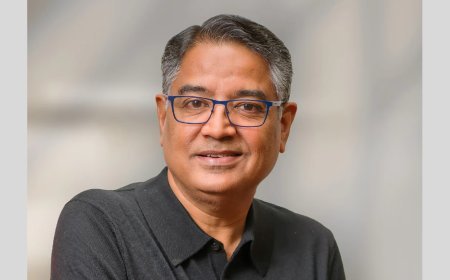
But for Madhusudan E, cofounder and CEO of KreditBee, the “reward” came much earlier, when the company first went live in April 2018 and saw an immediate, organic response.
“People in India hadn’t seen such a product before. Instant loan without visiting a branch, a pure digital lending experience,” he said, adding that the app went viral almost instantly, giving an early validation of KreditBee’s contrarian approach.
So, what’s the core thesis that helped Madhusudan build a unicorn, even in a challenging funding environment? Let’s start from scratch, diving deeper into KreditBee’s journey in this edition of The Outline.
Challenging The Orthodox Lending Paradigm
KreditBee’s origin is rooted in a structural gap that traditional lenders overlooked for years — the demand for instant, small-ticket credit delivered through a fully digital, no-branch experience, especially among underserved and new-to-credit users.
But what led to this epiphany? Before founding the company, Madhusudan was a product manager at an ecommerce company. Between 2012 and 2014, he attempted to integrate lending into ecommerce checkout flows, essentially an early version of BNPL. He, however, encountered resistance.
“Back then, there were hardly any lenders in India who would lend money without seeing the borrower. There was a major trust deficit,” he recalled.
This became an opportunity.
While legacy lenders were constrained by physical verification and rigid underwriting systems, Madhusudan saw the possibility of building a fully digital, data-driven lending stack. In 2016, he, along with Karthikeyan K and Vivek Veda, incorporated KreditBee. By 2017, the company had secured an NBFC licence under KrazeBeee Services.
But the bigger bet wasn’t regulatory, it was philosophical — directly challenging the dominant lending playbook, offline.
However, challenging traditional lending meant the founders had to build systems that were robust and foolproof. Therefore, the founders ran controlled beta tests with college students.
“This wasn’t just predictive testing; it was adversarial testing of the risk engine. Plus, the primary reason behind this was to make sure that our stack was hackproof. College students typically have time on their hands, so we chose them,” Madhusudan said.
Once confident in the system’s resilience, Kreditbee was officially launched in April 2018.
“The response was immediate. People in India hadn’t yet witnessed something like an instant loan,” he said. The virality of the product was almost instantaneous, and the company disbursed ₹3 Cr in loans within the first month of launch.
“Within five months, we were already doing ₹100 Cr, despite maintaining a tight approval rate of just 4%,” the founder said, adding that KrediBee has always prioritised risk filtration over aggressive expansion, “a pattern that continues to define our operating model”.
Finding The Sweet Spot
While Kreditbee initially targeted students, it quickly moved towards a more scalable segment, which was salaried individuals, covering a market beyond tier I and II cities and towns. Today, this cohort contributes nearly 70% of its user base.
Today, the company disburses around 30,000 loans every day. It has served 18 Mn unique customers to date and disbursed a cumulative 60 Mn loans. Its product suite has also expanded to include personal loans, business loans, loans against property, and two- wheeler loans. While the average ticket size varies in accordance with different product suites, KreditBee’s average ticket size stands at ₹60,000.
Nearly 90% of its portfolio is unsecured lending, with secured products being introduced only recently. While secured lending reduces risk, unsecured lending offers higher yields, provided underwriting remains robust.
The platform sees roughly 70,000 daily downloads, with nearly half driven by word of mouth and the rest through performance marketing. This level of organic traction is notable in a category typically associated with high acquisition costs.
Besides, partnerships with platforms such as PhonePe, Paytm, Airtel, and Tata Digital have enabled KreditBee to embed itself into high-frequency consumer ecosystems.
The company reverse-flipped to India last year in July and is currently in the process of merging its NBFC and tech entities.
On the financial front, KreditBee would be reporting an operating revenue of around ₹3,300 Cr for FY26, up 25% YoY from a revenue of ₹2,700 Cr posted in FY25. It is also likely to report a 45% YoY increase in profits, compared to a net profit of ₹470 Cr in FY25.
Its assets under management for the just-concluded fiscal year stood at ₹15,000 Cr, up 44% from the ₹10,100 Cr reported in FY25.

In Sync With The AI Age
At its core, KreditBee operates as a risk management system powered by data. According to Madhusudan, more than collection, lending is a risk management function.
The company aggregates data from around 150 sources, all shared with user consent, to build detailed borrower profiles. This data feeds into its AI and machine learning models, which determine credit behaviour and repayment likelihood.
This creates a compounding advantage. As more data flows into the system, underwriting becomes sharper, which improves portfolio performance.
To date, KreditBee has underwritten 8 Cr applications and disbursed loans to 1.8 Cr borrowers using these models.
As far as its collection metrics are concerned, around 93.5% of repayments are made on time, and this number increases to nearly 99% within the next 30 days with follow-ups. The startup supports this with an in-house collections team of 1,800 people, but the emphasis remains on predicting risk rather than reacting to it.
KreditBee also leverages AI in customer engagement. In FY26, the company handled around 70 Lakh customer interactions with the help of AI-assisted systems.
It is now investing in AI chatbots aimed at helping users make more informed borrowing decisions. “If you don’t invest in AI, you will lose out on the new Gen Z crowd,” he said.
A Clear Road To D-Street
Today, KreditBee is preparing for a public listing, which could happen as soon as the end of 2026 or may even spill over into early next year. As of now, the company plans to raise up to ₹1,000 Cr through a fresh issue, with an offer-for-sale (OFS) component yet to be finalised. With bankers aboard, it is likely to file its DRHP in the coming months.
Beyond the IPO, KreditBee has a more ambitious plan of becoming a small finance bank in the next five years. This reflects a broader trend among fintech lenders, which is moving up the regulatory stack to access cheaper capital and expand product offerings.
However, this transition won’t be easy, as a banking licence comes with stricter compliance, capital adequacy requirements, and operational complexity.
KreditBee’s journey is proof of how a clear PMF and strong fundamentals can help startups win in the long haul.
However, bigger challenges loom as it moves towards securing a banking licence and an IPO. Is KreditBee prepared to stand tall against the rising tide of regulatory quagmire and market volatility?
Edited By Shishir Parasher
Creatives By Abhyam Gusai
The post The Making Of A Lending Tech Unicorn appeared first on Inc42 Media.