

Repair, Resell, Relove: India’s Circular Fashion Era
 Superadmin




A few years ago, circular fashion was a niche buzzword whispered at sustainability conferences and tucked into Instagram captions of a few. Today, it has made its way into Indian wardrobes. Interestingly, Indian D2C brands are trying to lead this revolution.




A key example is Bengaluru-based D2C menswear brand, Snitch, which integrated sustainable fashion platform Relove into its website in 2024. With this partnership, the brand allows its customers to resell used Snitch articles and buy authenticated pre-owned ones. Similarly, One Less is designing single‑fibre basics with a planned buy‑back scheme in the pipeline that nudges the brand into a closed‑loop system.
Some brands are good examples of sustainable, upcycling-led design, but they are still only partly circular. This is because they mainly focus on reusing waste before selling products or on recycling textile waste collected from different sources. Some key examples in this space are Doodlage, Iro Iro, Parichay (by Vigya Crafts), IndieJeanous, and Neeman’s, among others.
India’s circular fashion, projected to grow to around $1.6 Bn by 2033 from $272.51 Mn in 2024, is still figuring out how to scale. However, this growth has a few visible stumbling blocks.
Today, brands talk about take‑back programmes, pre‑owned collections, and repair‑it‑for‑life campaigns, but these initiatives often remain limited to pilots, Instagram experiments, and city‑specific.
On the consumer side, while circular fashion is gaining some traction due to Gen Z’s value-conscious buying habits and love for ‘thrifting’, it still faces challenges around factors like trust, hygiene, and quality.
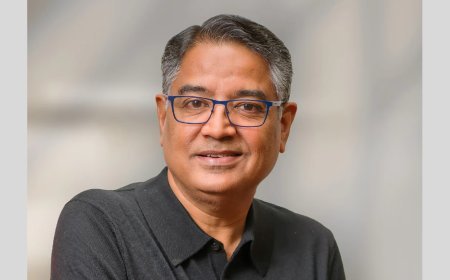
“Today, circular fashion in India is still more ecosystem-led than brand-led. Third-party recommerce and thrift-led resale are seeing the most visible traction, especially among Gen Z consumers. But this momentum is largely fragmented and driven by platforms rather than integrated into brand operating models,” said Amar Nagaram, cofounder & CEO, VIRGIO, a circular fashion brand. Nagaram is a former CEO of Myntra.

The Circular Versus Sustainable Debate
Most Indians use the terms ‘sustainable’ and ‘circular’ interchangeably in fashion. Sustainable fashion focuses on how a product is made: better fabrics, lower emissions, ethical sourcing, and local production. Circular fashion, on the other hand, focuses on what happens after — the reuse, resale, repair, recycling, and systematic extension of a garment’s life.
This distinction matters because India has already seen a wave of sustainable D2C brands emerge over the past decade. Many focus on organic cotton, low‑impact dyes, or conscious storytelling.
But circularity requires brands to stay involved even after the first sale — building systems for returns, resale, refurbishment, or recycling. That is where things get complicated.
Different circular models are progressing at very different speeds in India. Take‑back programmes are emerging, but most remain in pilot mode.
Repair is deeply embedded in Indian culture, but largely informal and unbranded. Rental works in niche use cases, like weddings or events, but not yet as everyday consumption. Material‑to‑material recycling is still at an early stage and far from commercial scale.
Resale is currently the strongest entry point because it aligns with existing digital behaviour and requires relatively lower operational investment from brands. Platforms like curated luxury‑resale marketplaces and upcycling labels such as Doodlage and Iro Iro are giving circularity a visible face.
“Circular models are retention levers. Most founders and investors see them as ways to improve customer lifetime value and repeat behaviour through mechanisms like exchanges, credits, or resale participation,” said VIRGIO’s Nagaram.
Circular Fashion’s Real Inflexion Point
According to Alvarez & Marsal’s managing director Mani Singhal, the first real scale opportunity in this area of circular fashion emerges from resale, repair, refurbishment, deadstock monetisation, and more organised reverse flows — and not from advanced recycling alone.
“The near‑term inflexion point is less about a futuristic circular model and more about building commercially viable pathways to extend product life and recover value,” Singhal said.
Circularity will become a baseline expectation only when it starts making business sense across the value chain, not just as a sustainability story.
For most fashion players, the turning point will come when circularity is seen as a way to improve inventory productivity, recover value from returns and excess stock, and boost customer engagement, rather than just as a brand‑story lever. Once circularity is linked to economics, not just ethics, adoption will accelerate.
To get there, the ecosystem needs stronger trust mechanisms, better reverse logistics and sorting infrastructure, and product design built for longevity and repair.
Circular fashion will remain niche as long as it is treated as an alternative; it will become mainstream when it is embedded into how brands design, sell, recover, and re-monetise products.
Circular fashion is in its early stages in the country. The wheel is turning, and the challenge now is to make it spin at scale.
SPOTLIGHT | How Peping Is Disrupting India’s Beverage Market With Fizzy Prebiotic Drinks
- Peping is positioning itself as a D2C beverage brand offering healthier versions of fizzy drinks with no added sugar. The brand offers prebiotic fizz drinks, as well as prebiotic shots for better gut health.
- Under the prebiotic fizz drink segment, the brand currently has three SKUs — lemon, strawberry, and watermelon flavoured drinks containing chicory root insulin, kudzu root extract, ginger juice, and natural fruit concentrates.
- The brand works on an omnichannel distribution strategy, with its products available on its own website, quick commerce platforms like Swiggy, Zepto, BigBasket, and retail stores as well.

Ecommerce Buzz
- Hocco’s Funding Buffet: Ankit Chona-led ice cream brand has raised ₹100 Cr in its Series C funding round from Sauce.vc to augment manufacturing capacity to 4 Lakh litres per day from 2.5 Lakh litres currently.
- Flipkart’s Ticketing Foray: The ecommerce giant is planning to enter India’s movie and live events ticketing segment as it preps to raise a pre-IPO round of $2-$2.5 Bn. It is planning a public listing at a valuation of $60-$70 Bn
- Desi Farm’s FY26 Show: D2C dairy brand Desi Farms claimed that its revenue jumped 8X to over ₹300 Cr in FY26 on the back of acquisition and distribution expansion.
The Deep Dive

The Operator Question
For any brand trying to build a circular fashion business, what are the three most critical operating levers they should prioritise from day one?
We reached out to Canvaloop founder Shreyans Kokra. Canvaloop is among the early companies in circular fashion to show that agri-residue can be converted into high-quality textile materials through proprietary technology and a scalable operating model.
According to him, for any brand looking to build a circular fashion business, success depends less on storytelling and more on disciplined execution.
The first lever is clean and transparent consumer messaging — what is being used to make the product, how sustainable the process actually is, and what the end of life looks like.
The second is the sustainability premium — it may exist initially, but it should reduce over time versus a regular offering of equivalent quality.
The third is true ESG measurement — real carbon, water and energy savings, not just metrics that look good for optics.
The post Repair, Resell, Relove: India’s Circular Fashion Era appeared first on Inc42 Media.