

Why ShareChat Stopped Chasing Instagram And Bet Big On Microdramas
 Superadmin




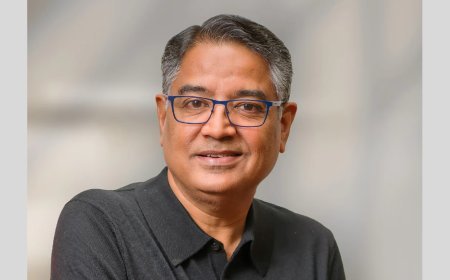
It takes years of experience of navigating through waves of market trends, economic cycles, investor scrutiny, pivots and P&L maths before a founder admits that somewhere things went wrong, as ShareChat cofounder and CFO Manohar Charan says today.




“We tried the replacement angle. And finally realised that network effects were too strong. Comparing our scale, capital and tech to Silicon Valley giants is like comparing chalk and cheese. You can’t take Meta or Google head on. You can’t say I’ll do the same thing and beat you at it,” Charan told Inc42 in a recent chat.
One of the earliest contenders from India looking to create a homegrown social media platform, it’s been more than a decade since ShareChat emerged in 2015 as an Indian regional language alternative to Facebook and Twitter.
After inching forward and gaining users in the first five years, ShareChat was about to realise that competing with Silicon Valley giants was no small task — not to mention Chinese behemoth TikTok, which was already a sensation in India by 2019.
But then in 2020, the Indian government’s ban on TikTok, gave a new impetus to Indian social media apps. Short video was the flavour of the year then and more than a dozen Indian apps gained prominence overnight. ShareChat’s Moj was one of them.
Since that momentous ban and the growth months that followed though, the story of Indian short video apps has been a story of attrition.
Despite raising over $1.3 Bn over its lifetime from the likes of Google, Lightspeed Venture Partners and Temasek, ShareChat is stepping into the today’s age of AI with something completely new.
So when the startup’s CFO says what investors and analysts had been whispering in private for a while, it is time to take notice.
Charan’s admission shows that ShareChat is reinventing itself again. He says that this is the time for another big push.
This reinvention comes on the back of the company crossing the ₹1,000 crore revenue mark for FY26, the CFO said, with nine consecutive months of positive cash flow under that topline figure. And while ShareChat is still a social media company, it has its radar turned to micro dramas rather than creator-led content and aping Instagram or TikTok.
How ShareChat Stopped Burning Cash
For anyone tracking ShareChat over the past few years, the company’s trajectory tells two distinct stories, one before May 2022 and one after.
Before that inflection point, ShareChat was a textbook style hypergrowth startup. It raised aggressively, spent aggressively, and chased user growth in the short video and regional language content market that seemed to be booming at that point.
By its own admission, the company was spending $1.80 per user per year (roughly ₹140-150 in those days) on cloud computing alone — against advertising revenue of just 30 cents (around ₹25) per user.
“The cost of servicing a user was six times the money we were making,” Charan recalled.
“And as the social media market is a churning user base, you would end up losing the majority of those users anyway. So the net result was: you’d get a user and lose ₹120, and then lose the user as well.” he told us in a candid conversation.
But when the funding winter set in in mid-2022, ShareChat had to take hard calls.
It halted user acquisition spending entirely — something unthinkable for most consumer internet companies. The goal was to bring server costs and ad revenue to parity, which the company internally called “meeting in the middle” at $1 (roughly ₹80 by then) per user.
According to SimilarWeb app intelligence data reviewed by this publication, ShareChat’s core social networking app had 104 Mn monthly active users in March 2024. By February 2025 — the last month for which data is available — that figure had fallen to 79 Mn.
Now unlike giants like Instagram, Youtube or Meta where organic consumer addition is a norm, ShareChat’s niche positioning meant that user acquisition was still expensive with huge marketing spends and inorganic strategies at play.
By early 2025, ShareChat had reduced its cloud compute cost from $1.80 per user to approximately 60 cents (₹50), accomplished entirely through engineering, Charan revealed.
“The team rewrote legacy code, developed differentiated compute allocation (spending more server resources on high-monetisation users, less on lower-value ones), deleted content that algorithms had consistently rejected, and built infrastructure that allowed the company to migrate between cloud vendors in days rather than months giving them genuine negotiation leverage with providers.”
The result, ShareChat’s CFO says, is that February 2025 became the first month in ShareChat’s eleven-year history where the closing cash balance exceeded the opening balance. It was the first cash breakeven month.
“From FY24 to FY25, there was literally zero growth in revenue,” Charan acknowledges. “But our adjusted losses dropped from ₹800 Cr to ₹219 Cr. And towards the end, accounting losses were less than ₹5 Cr a month and cash flow wise we were positive.”

The FY26 numbers, though yet to be fully audited at the time of this conversation, tell an even better story.
Revenue is set to cross ₹1,000 Cr, representing roughly 38% year-on-year growth. Quarter-on-quarter growth rate is also accelerating — from 28% in the July-September 2025 period to 47% in October-December to 65% in the January-March 2026 quarter.
Adjusted losses for FY26 are expected to be roughly half of FY25 levels. And April 2026 is projected to be the first EBITDA-positive, PAT-positive, and cash flow positive month. For Charan, who has navigated the tough years on ephemeral margins, this is a major milestone.
“At ₹1,000 Cr revenue, if the business is not profitable, then there is something seriously wrong with the business model,” Charan says.
For context, ShareChat’s parent Mohalla Tech Pvt Ltd announced that it had trimmed its adjusted EBITDA loss by 72% to INR 219 Cr in FY25, so the turn to profits is something that would be closely examined as soon as the company releases its FY26 numbers publicly.
The Stagnation of the Core — Why Social Networking Hit a Wall
ShareChat may have been on a trajectory of improving unit economics but one cannot avoid the uncomfortable truth: its core social networking business has largely plateaued. The path to an ₹1000 Cr revenue mark and beyond is not being paved by ShareChat’s original value proposition of building an Indian language social media, but by a new format altogether: microdramas.
But why did the core social networking business stagnate?
When the post-TikTok boom kicked off in India in 2020, the likes of ShareChat’s Moj, VerSe Innovation-owned (DailyHunt) Josh, MX TakaTak, Chingari, Mitron, Bolo Indya, Trell and a host of other apps competed furiously for creators who were habituated to short video.
Platforms paid handsomely to attract influencers, knowing that content supply would drive user demand. It worked, briefly.
But creators follow two things: fame and money. And on both counts, Instagram and YouTube continue top have have structural advantages that no Indian startup could overcome even with as much capital as ShareChat.
“Meta generates $3 Bn of revenue from India alone,” Charan points out. “The capital that we raised in our entire life was $1 Bn.”
Plus, the Silicon Valley algorithms have been perfected and improved as more and more users drove to these platforms. The global user base means a creator with genuine ambition will always prefer it for visibility.
And while the likes of DailyHunt, MX Takatak, ShareChat and others were going after smaller, regional-language creators to provide better discoverability and monetisation on their Indian platforms, this was a niche USP that worked well only in select geographies.
“Instagram is great for a Virat Kohli. Instagram is great for a movie celebrity because their name will attract users. Our promise to an average creator is: if you are not a known face, if you’re a smaller creator from a small town, your chances of reaching X number of followers is higher here because your discoverability is better,” the CFO explained.
This also explains why ShareChat’s user acquisition engine struggled the moment it stopped subsidising creators and users. Like Charan said, for three years, between 2022 and 2025, the company spent zero on user acquisition.
Organic downloads, although kept the platform alive with use cases highly tilted towards festive-wishes and regional-language content, there was a decline in the DAU and MAU numbers as stated previously.
ShareChat calls this as a deliberate strategy.
“Until the time I am profitable, I will not acquire new users. Until the time my cost of servicing the user is higher than the revenue I make, I will not spend money to acquire new users,” Charan claimed.
ShareChat Moj’s saving grace is that it survived when every other Indian short video app — Josh, MX TakaTak, Roposo, Trell and others effectively faded out.
Moj and ShareChat together hold 200 Mn retained users out of approximately 500 Mn lifetime downloads, Charan claimed. This is a huge audience that can be tapped for revenue.
And critically, 95% of ShareChat’s audience overlaps with Meta and YouTube users meaning users are not choosing ShareChat instead of Instagram, they are choosing ShareChat and Instagram. The former for regional language content, festive wishes, and community; the latter for everything else.
“It is not Meta versus ShareChat, it is Meta and ShareChat,” Charan says.
This effectively changes the narrative that ShareChat is a contender to Meta, Youtube, Instagram.
The Microdrama Bet — New Revenue Engine or Another Leaky Bucket?
With the tempering of aggressive growth for the core social networking business, ShareChat’s next act is microdrama — it’s the biggest sensation in the social media category on app stores
The Indian microdrama market is crowded and chaotic. There are reportedly at least 50 microdrama apps in the country, most built around the same subscription model. ShareChat launched QuickTV in February 2025.
ShareChat’s CFO claims that KukuTV, which claims around 10 Mn paying subscribers leads the market, followed by EloElo (claim of 3.5 Mn subscribers), and ShareChat’s Quick TV (also 3.5 Mn).
“On subscription, people are claiming ₹2,000 Cr revenue and are still not profitable. It is pass-through revenue. Whatever they collect from users, they spend on user acquisition. It’s not a pitcher where you put in water and it can hold almost all of it, there are a lot of holes in the middle,” according to ShareChat’s CFO.
He contends that acquiring a paying microdrama subscriber costs anywhere between ₹300 and ₹500 per user compared to ₹ 7 to ₹12 to acquire a general ShareChat or Moj user. Content costs ₹15 to 20 Lakh per hour. “The only way to break even on content through advertising alone would be to generate 40 to 50 Mn views per series which is not feasible for most titles.”
This pushed the industry toward subscription as the natural monetisation model. This has at least created sustained revenue flow because users pay for access for a full quarter or one month. They are locked in for that time period. This means ShareChat or others don’t have to force a new feature to retain users.
However, like social networking platforms, user churn in the microdrama market is high and the only metric that matters is the difference between cost-of-acquisition and day-one revenue.
“If I were to put it bluntly, I don’t care if the user leaves the day after, as long as he gives me ₹500,” Charan says. “And therefore there is no inherent force that pushes you to build a good product, that pushes you to build hooks that will get users to actually stick around, something that is a challenge for ad revenue dependent free to use social networking platforms.”
The Dual-Track Approach
QuickTV’s launch is feeding into Moj too.
ShareChat says that as per its data, micro drama players in India collectively boast of 2 Bn minutes a month in terms of viewership. For Moj and ShareChat put together, the total time spent is 20 Bn minutes in a month. “That is 10x the size of the entire subscription micro drama ecosystem,” Charan said.
Session time or user engagement is the foundation for advertising revenue.
And advertising revenue, in ShareChat’s Moj + QuickTV model, is the real prize. The margin on ad revenue is approximately 90%, compared to effective subscription margins of 0-40% once marketing costs are honestly accounted for.
QuickTV today has roughly 10% EBITDA margin, the CFO claimed. “We could have built a subscription at least 3x of where we are today if we had decided to just run a leaky bucket. We’ve been using the subscription business to run it profitably.”
This is what the freemium model looks like at scale: approximately 2% of the total users are paying subscribers with an average revenue contribution of ₹200 per month. The remaining 98% are free users generating roughly ₹100 per user per year through advertising.
And as the ad-supported model scales with increasing time spent, the revenue mix will gradually tilt toward advertising — which is exactly what happened in China, where ByteDance’s Hongguo microdrama app wiped out the subscription-driven microdrama ecosystem.
“The China micro drama market started, went through the roof, ByteDance one fine day launched an app, and that app has killed all subscription models in China because they can monetise well through ads,” Charan says, and he indicated that eventually ShareChat and other players will have to see how to cope with this potential shift in India.
“Our thesis is that the user base for micro drama or willing consumers for micro drama is as big as YouTube size. But somebody will have to build an ecosystem to retain them and make money through ads.”
Growth brings other challenges. User acquisition spending is growing gradually again. The cost of acquiring a Moj user today is approximately ₹7 and the platform generates that back in net profit (after server and content moderation costs) within four to five months.
The CFO says the golden rule is that any user that the company acquires and services through ads has to pay back the CAC within six months.
ShareChat’s journey over the past two years reflects a broader shift in India’s startup ecosystem. The emphasis is no longer on replacing global incumbents, but on building sustainable businesses within their shadow.
But questions remain. Can the advertising model on Moj actually scale to the heights that Sharechat has envisioned? Can ShareChat hold its regional-language creator base as Instagram continues to improve vernacular features? And in the microdrama subscription market, can Quick TV survive the pricing wars that Kuku’s repeated price hikes already signal?
While ShareChat leadership may have moved away from the narrative of projecting the social media unicorn as TikTok or Instagram replacement, will the microdrama edge be sustainable in the long run?
[Edited By Nikhil Subramaniam]
The post Why ShareChat Stopped Chasing Instagram And Bet Big On Microdramas appeared first on Inc42 Media.