

Libas’ Next Big Thing After Hitting The ₹600 Cr Revenue Mark
 Superadmin




Imagine trying to build a fashion brand in a market where consumers don’t really believe in brands, there is little standardisation, sizes vary, quality is inconsistent, and pricing lacks transparency. And now, imagine running such a business in this space when ecommerce had yet to convince consumers that it was okay to take the online plunge.




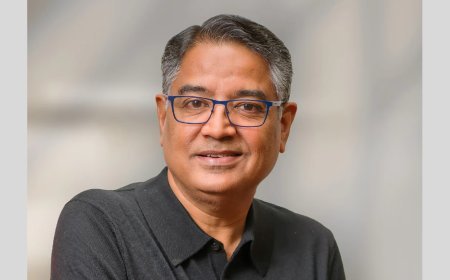
That was the reality of India’s ethnic wear market when Sidhant Keshwani, the founder and CEO of Indian ethnic wear brand Libas, joined his family’s textile business in 2014. He wasn’t entering a high-growth, venture-funded startup ecosystem but a legacy industry that had remained largely unchanged for decades.
Back then, India’s ethnic wear market was deeply fragmented, dominated by unorganised players and local retailers. Consumers didn’t think in terms of brands but familiarity.
Shopping for Indian wear was a hands-on experience. People preferred to feel the fabric, check the quality in person, and visit the same stores because of the trust factor.
Ecommerce, though growing, had not yet penetrated the ethnic wear space and was considered resistant to online adoption.
However, Indian cities were undergoing a quiet shift. More women were starting careers, especially in corporate jobs, which meant their daily routines became busier. They were looking for clothing that matched this fast-paced lifestyle, something stylish but also practical. At the same time, social media was exposing them to global fashion trends. What they saw online began to influence what they wanted to wear, raising expectations around design, variety, and overall style.
Despite clear white space, Indian wear remained stagnant, offering limited design innovation, poor standardisation, and only a few brands that truly engaged with this new consumer.
Keshwani saw this gap clearly. “The new-age consumer was moving towards brands and aspiration. Ecommerce was picking up, and I was very clear that this was going to be the future.”
This insight became the foundation for Libas. Instead of trying to build a broad fashion brand, Libas started with a focused proposition: affordable, functional Indian workwear for women that is available online. The bet, he added, was not on the category but on the behaviour of consumers becoming comfortable buying fashion online.
A decade later, Libas has scaled into a ₹1,000 Cr+ ARR brand, built largely without external capital, with a strong mix of online and offline channels, and a playbook rooted in profitability, speed, and deep consumer understanding.
What started as a focused bet on affordable workwear has evolved into a fast fashion-led ethnic wear business, with growing ambitions across categories and geographies.
So, how did Libas build scale in a category that was slow to change, and win consumers who were once reluctant to shop for Indian wear online?
Cracking PMF In A Highly Price-Sensitive Market
The early days of Libas were defined by learning and adaptation. One of the first insights the team gathered was around pricing. Indian consumers, especially online, were extremely price-sensitive. Convincing them to spend on a relatively unknown brand required a careful balance between affordability and perceived value.
“People were not ready to spend more than ₹600-₹700 on a product. So we had to build a product that fits into that price bracket but still delivers quality,” Keshwani said.
Libas chose workwear kurtas as its entry category. These products had repeat utility, standardised sizing, and aligned naturally with the target price range. But even with the right product, the biggest challenge was acquiring first-time customers.
“The first-time customer acquisition was extremely difficult. Fashion is something people want to try. They want to feel the fabric, check the fit,” Keshwani said.
To overcome this, Libas focused on reducing friction at the entry point. It offered strong value, ensured consistency in sizing and quality, and relied on promotional strategies to encourage first-time purchases.
“Once the customer tries the product and likes the fit and quality, they don’t hesitate to come back,” he added.
Within months, Libas began seeing strong demand signals. Products were frequently going out of stock, and repeat purchases started forming a meaningful portion of revenue. This was the turning point, the moment the brand knew it had cracked product-market fit.
It wasn’t driven by brand-building exercises. It was driven by a simple principle: deliver a reliable product experience, and the customer will return.

Building A Business Without Burning Capital
In today’s D2C ecosystem, growth is often synonymous with capital. Brands raise aggressively, spend heavily on customer acquisition, and chase scale at all costs. Libas took a fundamentally different approach.
For nearly a decade, the company remained bootstrapped. “We have always been averse to burning capital, which is also why we have been profitable since day one.”
The founder added that growth was not pursued at the expense of profitability. Every decision had to make financial sense. Marketing expenses, inventory planning, or expansion — everything was aligned with internal cash flows.
“We never chased inorganic growth. We only grew as much as our profits allowed. This is something that has shaped the company’s DNA.”
It forced Libas to focus on unit economics early, optimise operations, and avoid unnecessary risks. While many D2C brands scaled rapidly through external capital, Libas built a slower but resilient growth engine.
By the time it reached around ₹500 Cr in revenue, it had already proven that scale and profitability could coexist. This approach also insulated the company from market volatility.
The Pivot To Fast Fashion
A few years into the journey, Libas identified a much larger opportunity. Globally, fashion was evolving rapidly. Fast-fashion players in markets like the US and the UK were introducing new styles at an unprecedented pace, responding quickly to trends and consumer preferences.
In contrast, Indian ethnic wear remained largely unchanged. “Fashion in India was slow to adopt. People were still wearing the same silhouettes, same fabrics, same designs. But consumers were no longer content with static wardrobes. They wanted newness, variety, and immediacy,” the founder said.
Libas saw an opportunity to bring fast-fashion principles into ethnic wear. This meant rethinking the entire operating model — from design to production to distribution. Speed also became the core differentiator.
The company began aggressively reducing its turnaround times. From nearly 100 days in the early years, production cycles were slashed to around 45-60 days.
This allowed Libas to launch new designs more frequently, respond quickly to emerging trends and minimise inventory risk. However, executing fast fashion in India came with significant challenges.
“Unlike China, where there are massive factories, India has small factories. There are inconsistencies, labour challenges, and delays in delivery commitments,” Keshwani said
Managing this fragmented supply chain required constant effort. Libas had to build strong relationships with vendors, standardise processes, and gradually introduce efficiencies.
The pivot paid off, with fast fashion becoming a key growth driver, aligning the brand with evolving consumer expectations and setting it apart in a crowded market.
From Marketplaces To Owning The Customer
In its early years, Libas relied heavily on marketplaces for growth. Platforms like Myntra and Flipkart provided the infrastructure needed to scale: discovery, logistics, and reach.
At one point, nearly 95% of the brand’s revenue came from these platforms. But as the business matured, they recognised a limitation. “For any brand, if you want to communicate, you need to own the consumer data,” Keshwani said.
Marketplaces offered scale, but they did not offer control. Brands had limited visibility into customer behaviour, preferences, and feedback. This led to a strategic shift towards D2C channels.
Today, the Libas website and app contribute a significant portion of revenue. “We now understand what the consumer wants, we get real-time feedback, and it becomes easier to communicate with them,” he explained.
Owning the customer relationship has enabled Libas to improve retention, personalise marketing and make better product decisions. It has also reduced dependence on external platforms, giving the brand more control over its growth trajectory.

Libas’ Offline Trust Engines
After nearly a decade of digital-first growth, Libas entered offline retail two years ago. For many D2C brands, offline expansion is challenging due to high costs and operational complexity. But Libas approached it with a clear understanding of its role. Its offline expansion was more about building trust than doubling revenues.
This created a powerful flywheel effect. Customers discovered the brand offline, built trust through physical interaction, and then transitioned to online channels for repeat purchases.
Libas leveraged its strong online data to guide offline expansion. “Because of our data, it is very easy for us to decide which pin codes to enter,” the founder said.
This data-driven approach reduces risk and improves store performance. As a result, many of Libas’ stores have been profitable from the early stages.
After years of bootstrapped growth, Libas raised its first round of funding in 2024. “The decision was driven by opportunity. Why spend another 7-8 years when you know consumers are already out there?” he said.
The capital is being used to accelerate expansion, particularly in offline retail, which requires significant investment. Libas’ revenue mix has undergone a significant shift over the past few years. While marketplaces once dominated the business, contributing nearly all of its sales, its share has steadily declined as the company built its own channels. Today, its D2C channels account for roughly 40-45% of revenue.
Libas reported a steady rise in scale in FY25, with revenue from operations growing from ₹486.5 Cr in FY24 to ₹609.1 Cr. This growth, however, was accompanied by a sharper increase in overall expenses, which rose from ₹482.4 Cr to ₹621.2 Cr during the same period. As a result of this higher spending, the company moved from a profit of ₹4.8 Cr in FY24 to a loss of ₹16.5 Cr in FY25, according to MCA filings of Zivore Apparel Private Limited, which operates Libas.
This comes at a time when the company is investing heavily in scaling its offline retail footprint and expanding its distribution network, including newer channels like quick commerce.
Although Keshwani did not disclose absolute numbers for FY26, he mentioned that the company saw around 20% growth in the year and has crossed the ₹1,000 Cr ARR mark.
What’s Next For Libas
The company is exploring new growth avenues, including quick commerce and category expansion. It has already launched fragrances and is considering entry into the beauty segment.
At a broader level, Libas is building a house of brands.
“Now that our distribution playbook is strong, it becomes easier to launch new categories and brands,” Keshwani said, adding that it allows the company to cater to multiple consumer segments while leveraging its existing infrastructure.
International expansion is also on the horizon, with markets like the UAE being explored. On the other hand, Libas is increasingly betting on quick commerce as a key growth lever, reflecting a broader shift in consumer expectations around speed and convenience.
Traditionally, fashion has not been an instant-delivery category, but that is beginning to change. The company is approaching this opportunity through a dual strategy, partnering with existing quick commerce platforms while also building its own rapid-delivery capabilities.
In the Indian D2C space, Libas faces stiff competition from established ethnic wear retailers and modern online fashion labels like Biba, W for Woman, Manyavar, Mohey, Fashor, Suta, and Nykaa Fashion.
This makes the road ahead complex, even though its journey so far has been disciplined execution, strong unit economics, and a sharp understanding of consumer behaviour.
The very factors that helped Libas stand out — affordability, fast design cycles, and online-led distribution — are no longer unique.
Competition in ethnic wear has intensified. At the same time, rising customer acquisition costs and increasing operational complexity from offline expansion have started to press margins, as reflected in its recent shift to losses.
Its push into fast fashion and quick commerce also brings new risks. Speed, while a differentiator, demands tighter supply chains, better forecasting, and higher working capital.
For now, the shift towards becoming a house of brands and expanding into categories like beauty and fragrances could unlock new growth avenues. But, what will define the company’s next phase is still unclear. Is it the very principle that defined its first decade, or something entirely new?
Edited by Shishir Parasher
The post Libas’ Next Big Thing After Hitting The ₹600 Cr Revenue Mark appeared first on Inc42 Media.