

Is Algae The Answer To Carbon Capture? Intrinsic Foundries’ Green Fix For Toxic Waste
 Superadmin




Believe it or not, the simplest form of life can actually outsmart the most complex life form when it comes to protecting the climate. That’s where a Jharkhand-based startup is betting big time.




The technology to capture and bury carbon dioxide has gasped for breath to ramp up to the level it was expected, despite climate policy experts pushing for various methods for decades and billions being invested.
Countries and industries continue to struggle to get carbon capture, utilisation, and storage (CCUS) projects up and running, with the technology projected to trap only 40% of the target by 2030, while most major economies have pledged to go net-zero on emissions by 2050.
One of the major hurdles to widespread adoption of CCUS is that the technology incurs hefty costs but doesn’t yield immediate returns, effectively blocking the money and, in turn, slowing down commercial adoption. These systems are also energy-intensive and require specialised (often toxic) chemicals to isolate carbon dioxide from industrial flue gas.
Intrinsic Foundries aims to resolve such challenges by developing algae-based CCUS platforms that consume industrial waste and use it as a fuel to create precious biochemicals. Founded in 2023 by Shreyansh Jain, Sanjay Jain, and Umang Jain, it raised ₹12 Cr seed funding from Transition VC in February to expand its research activities, conduct more commercial pilots, and expand its team. It has also been part of the startup incubator programmes run by IIM Ahmedabad and Shell.
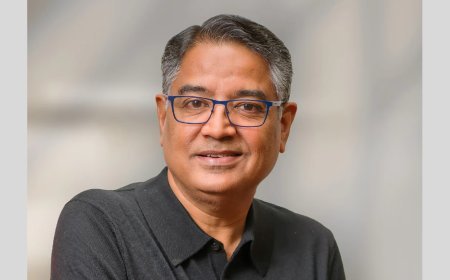
What drove the trio into the CCUS domain? “You can’t overlook the growing demand for CCUS,” Shreyansh Jain told Inc42.
An 8% annual average growth rate is expected to propel the $2.97 Bn global market to $6.17 Bn by 2033. On the home front, finance minister Nirmala Sitharaman has earmarked up to ₹20,000 Cr to scale up CCUS technologies as the government aims to capture 750 Mn Tonnes of carbon dioxide emissions from industries like steel, cement, and chemicals by 2050. The move aims to advance India’s target of going net-zero before 2070 by decarbonising manufacturing while continuing to power GDP growth.

Why Algae Became Intrinsic’s Focus
A pharmacology graduate from BITS Pilani, Jain went on to pursue higher degrees in chemical engineering at Imperial College London and later at Cornell University. His subsequent 10-year stint in cell therapy and gene therapy at various global pharma companies included an assignment with Japanese giant Takeda, where he worked on innovation and manufacturing technologies. These works made him familiar with concepts like PFAS, often referred to as ‘forever chemicals’ or hazardous chemicals that persist in the environment, and CCUS.
The seeds of Intrinsic Foundries germinated in an earlier startup Jain had founded. While this venture focussed on smart factories and automation in industrial environments, he saw the customers were facing hurdles to their emissions and waste streams. He put to use his experience in carbon capture.
The algae connection came in from conversations with his friends who were researching in the same space. The photosynthetic microbes absorb carbon dioxide like trees, but what makes algae more effective is their fast rapid rate of growth and efficient processing. Moreover, the algae do not just scrub carbon from the air, rather use it for nutrition, developing into biomass that can be converted into useful biological molecules. Unlike other microbes used in biomanufacturing such as E coli and yeast, algae can create much more complex molecules such as biomaterials.
The likes of Reliance and Total Energies have been working on algae-based systems to generate fuels for a long time without seeing significant success. Then what makes the startup hit the same road? They didn’t have the right approach to succeed, believes Jain.
According to him, some of these larger players were thinking of algae as a means to create commodities, whereas algae has more diverse use-cases. The critical part in scaling up these solutions is making sure that algae grows in the right conditions.
“You need to understand the biology and science of how to grow algae, know the right type of system best suited for it, insight in the bioprocess, the right type of equipment to cultivate it, break it down, and harvest products from it. Most of these companies were thinking of how to scale, rather than thinking from a systems standpoint,” the cofounder added.
The Economics Of Carbon Capture
With the rise of AI and boom in data centres, Jain believes that the demand for energy is outpacing the rate of transition from fossil fuels to renewables. Coal and natural gas are filling up the resultant gap.
Yet, policy initiatives across countries are pushing for zero-carbon operations. The EU’s Carbon Border Adjustment Mechanism (CBAM) policy, for example, taxes imported products based on the carbon emissions generated by their production. This raises pressure to decarbonise.
Intrinsic gets the whiff of opportunity there. Such an opportunity goes beyond meeting compliance requirements and runs into business incentives too. Manufacturers find a way to charge a ‘green premium’ on sustainably manufactured products. Green finance initiatives like India’s sustainability-linked bonds too are catching up, lowering the cost of capital for projects aligned with climate policy goals.
“The industry is paying money to get rid of carbon. Our intention is to make them understand that this is not a cost centre, but a resource that can be used to create value,” Jain said.
Intrinsic has developed two CCUS platforms for different types of waste streams – one targeting industrial flue gas emissions and the other effluents and wastewater. The first uses phototrophic algae, which can make their own food through photosynthesis, while the second uses heterotrophic algae that grow in the dark and feed on carbon compounds. The company works with a proprietary library of algae strains which are engineered for maximum carbon utilisation.
The more interesting part of the Intrinsic story is how it grows algae. Instead of using an old approach of creating large ponds, Intrinsic has created a proprietary extrusion system that produces a 3D-print of hollow tubular photobioreactors. Not only does this drastically bring down the space requirement, it also solves engineering challenges like contamination control, evaporation and water absorption that crop up due to open algae ponds.
“This completely changes the economics. One reactor is equivalent to 15 ponds of algae. And imagine with 15 ponds, you have no control on water evaporation, contamination or insects, flooding, or temperature,” Jain pointed out. “You cannot just put algae in a pond of water. The idea behind this requires a lot of engineering in terms of the flow rate, absorption rate, and kinetics in order to work at an industrial scale.”
It also has no constraints in terms of what type of infrastructure is in place at the project site – all that’s needed is a connection to the carbon dioxide source (a flue gas line or chimney). The algae biomass, once cultivated, can be harvested and converted into valuable biochemicals like gamma-linolenic acid, an ingredient used in premium cosmetics, and Omega-3 fatty acid. The company plans to create more types of biomolecules from its systems such as biopigments, protein isolates, enzymes, and fertilisers.
The Gap Between R&D And Commercialisation
Intrinsic has completed a major industrial pilot in collaboration with the Council of Scientific and Industrial Research (CSIR) at one of India’s largest power plants. It claims its system captured 85-90% of the carbon dioxide emissions and cultivated 3 Kg of biomass from the flue gas streams.
The startup offers two business models to companies. Those with no expertise in bio products and want to focus on their own business, can opt for a ‘buyback’ model where Intrinsic sets up its CCUS platform on-site under a cost-sharing arrangement, charging them an operating fee. It pays the customer to harvest the biomass generated from the system, which is refined into valuable biomolecules that fetch more revenue.
The other ‘end-to-end’ option is for companies that want to be more involved in the value chain. Under this arrangement, it licences the refining processes to the customer, which pays Intrinsic to refine and commercialise the molecules so that it can earn its revenue directly.
“This option completely changes the economics for companies in sectors like pharmaceuticals or cosmetics and becomes like a vertical integration of their supply chain,” Jain noted. “Algae can make certain biomaterials and biopigments that other microbes cannot create. An algae-based system can give you a continuous and consistent supply of high-quality biomass every day.”
Jain refused to share details about the company’s financial trajectory, stating that the business was at early commercial scale. “As a deeptech company, it takes time to scale up and revenue is not a real marker at this stage. When we speak to global investors, they generally focus on our IP, rather than our revenue.”
The startup has completed a few research projects in partnership with organisations like CSIR and multiple IITs as well as with various institutes in the US and Germany. Its pilot projects have mainly been at sites like steel, cement, and chemical plants. The company is actively working on 9-10 more projects in the pipeline, according to the founder.
Intrinsic is taking on a hard problem. But its algae-powered approach could offer the company an edge over competitors in the space like LanzaTech and OCO, whose CCU platforms output fuels, plastics as its output in the form of bio-based molecules can be a genuine value creation engine for industrial customers rather than a mere carbon storage locker or a commodity product.
The company’s path to success, however, can only be determined once the questions around its commercialisation resolve in the future.
[Edited by Kumar Chatterjee]
The post Is Algae The Answer To Carbon Capture? Intrinsic Foundries’ Green Fix For Toxic Waste appeared first on Inc42 Media.