

How SEDEMAC Became The “Intelligence Layer” For India’s Auto Giants
 Superadmin




When Pune-based deeptech manufacturing startup SEDEMAC Mechatronics made its stock market debut on March 11, it quietly broke the dominant startup narrative that India was primarily a market for consumer giants and ecommerce.




In a market where ecommerce, consumer services and fintech usually dominate the headlines, SEDEMAC’s IPO came as a welcome change. And what’s even more remarkable is how long it took SEDEMAC to get here.
When Shashikanth Suryanarayanan set up SEDEMAC in 2007, deeptech was nowhere near the investor radar. Nineteen years later, deeptech is the flavour of the season. Suryanarayanan has seen this entire journey up close.
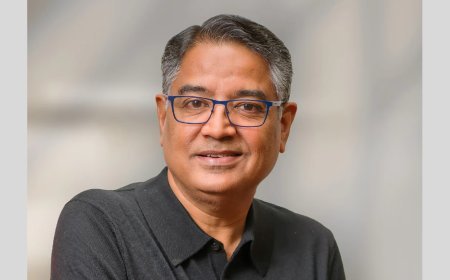
“There was scepticism that new technology and intellectual property could be built from scratch in India,” the SEDEMAC founder and managing director recalled.
Investors were more comfortable backing consumer-facing or easily scalable models than complex engineering-led businesses, and the data for deeptech funding backs this up. Despite growing enthusiasm, deeptech has received less than 1% of India’s total startup funding between 2014 and 2025, roughly $1.6 Bn out of a cumulative investment of close to $164 Bn.
But Suryanarayanan was confident that this was the future. He wanted to develop advanced electronic control units (ECUs), motor controllers, and powertrain solutions for automobiles and power generators that could fill a huge gap in the indigenous component manufacturing space. Most of these units had to be imported by Indian manufacturers back then, so there was a clear whitespace for this tech.
The only question was the timing. Was SEDEMAC too early?
Investors were not bullish about backing long R&D timelines and preferred to invest in high-growth sectors like ecommerce, fintech or consumer services. Secondly, building proprietary technology in this space is a decade-long effort at the very least.
SEDEMAC’s aim was to build embedded systems leverage sensor data and proprietary algorithms to control engines, motors and power generators. Essentially, the company’s systems act as the decision-making layer for these applications. “The ECUs decide how machines should respond in real time,” said Suryanarayanan.
Two decades later, the company’s early backers have not only taken partial exits after a major IPO, but many of them have retained significant stakes. This signals their continued belief in the long-term value of SEDEMAC’s IP and manufacturing tech. A91 Partners booked substantial gains while staying invested, while Nandan Nilekani’s family office lapped up outsized returns.
Since its stock market debut, the stock has been trading above its listing price. Its market capitalisation currently stands at ₹6,798 Cr, making it one of the biggest success stories in the still-nascent VC-backed deeptech space.
SEDEMAC’s Machine Intelligence Engine
When SEDEMAC began, founder Suryanarayanan’s core belief was that neither hardware nor software alone can be a true differentiator. According to him, anyone can build hardware and write software, but the real difference is made by “understanding the physics of the system you are controlling”.
He told us that since SEDEMAC’s tech sits at the core of machine functionality, the company is not a hardware vendor, but builds machine intelligence for modern-day systems.
Unlike companies building tech IP for licensing by the wider industry, SEDEMAC works closely with its customers and partners for deep integration with the end product, which is where the company has an edge over other players in this space.
The other major advantage is that SEDEMAC’s focus is on the mature automotive ecosystem where OEMs function primarily as assemblers, bringing together components sourced from a wide network of suppliers.
Within this structure, suppliers typically fall into two categories: those that manufacture parts based on predefined designs, and a much smaller group that contributes proprietary technology or complex subsystems.
Since SEDEMAC belongs to the latter category, it is harder for OEMs to replace the company’s offerings with alternatives, unless they rewire the entire platform.
And that’s only if alternatives are available. In some cases, the founder says, SEDEMAC’s offerings cannot be matched even by global component giants such as Bosch or Continental.
In other words, it is more than just another vendor; it’s an influential partner for many OEMs in India, such as TVS, Bajaj Auto, and Hero MotoCorp, alongside industrial clients like Kirloskar Oil Engines and Briggs & Stratton.

Domain Focus Delivers Profits
The focus on automotives and its IP-driven manufacturing stack has played a key role in helping SEDEMAC retain high margins. The company reported 20% EBITDA margin in the first nine months of FY26, which the founder says is well higher than any other parts supplier in India.
“You get this kind of margins if you are not a technology supplier. At best you might reach 10-12% because OEMs have many choices and keep pushing prices down, whereas technology suppliers, by virtue of having something others don’t, are able to maintain healthy margins and a strong competitive position,” Suryanarayanan told Inc42.
SEDEMAC works with leading OEMs across mobility and industrial segments, building systems that are embedded into high-volume products.
The company’s revenue reflects this structure. A large share comes from the mobility segment, particularly two-wheelers and three-wheelers. Certain product categories, such as integrated starter-generator systems and fuel injection controllers, contribute a significant portion of the overall revenue, which grew from ₹540 Cr in FY24 to about ₹640 Cr in FY25, and further to nearly ₹770 Cr in the first nine months of FY26.
Cost of materials makes up nearly 70% of the total expenses for the company, but the fact that this has not dented the margins underscores the leverage that SEDEMAC enjoys within its customer base.
The company’s revenue profile is highly concentrated, as a significant 75-80% of its revenue comes from a single key customer, with the top three customers contributing around 85-90% and the top 10 accounting for nearly the entire business.
On the one hand, it has enabled SEDEMAC to scale quickly within a focused domain, achieving a strong market share in specific segments. On the other hand, it has meant that the company’s growth is closely tied to the performance of a few products and a single sector.
Plus, in the two-wheeler and three-wheeler space, the customer universe itself is limited, with only a handful of large OEMs dominating volumes. “If you sweep the entire market, there will only be four customers,” the founder & MD said.
He also pointed out that concentration is partly a function of technology adoption cycles. New systems are first deployed by early adopters, leading to higher dependence on a few customers in the initial phases. As adoption broadens across OEMs, this concentration naturally reduces over time.

The Post-IPO Path
Unlike many startups that list as a way to raise fresh capital, SEDEMAC’s IPO was entirely an offer-for-sale. The listing allowed early investors to realise returns. It also brought the company into the public spotlight, increasing visibility among customers, partners, and potential investors.
Mumbai-based A91 Partners emerged as the biggest gainer from the public listing. The firm raked in ₹325 Cr by selling 24.1 Lakh shares, translating to a 3.6X return on its initial investment. Post offloading the shares, A91 Partners will still hold 56.2 Lakh shares worth ₹760 Cr, making it the biggest shareholder out of selling investors.
Besides this, Infosys cofounder Nandan Nilekani’s family office (NRJN Family Trust) offloaded 10.5 Lakh shares worth ₹141 Cr, translating to a 14.2X return on its initial investment. The family office will still hold on to 8.8 Lakh shares worth ₹119 Cr.
For many of the investors, this was a vindication of their early belief in the deeptech startup.
SEDEMAC’s listing challenged the perception that deeptech does not deliver returns, showing that it is possible to build a company that combines deep expertise in engineering with commercial success.
Now, being a public company will create new expectations. Public markets will look for consistency in growth, margins, clarity in strategy, and the ability to manage risks that have come up recently in various supply chains amid global geopolitical and armed conflicts.
Those watching this space believe the company’s relationships with OEMs and a focus on solving OEM-specific problems are advantages, but sustaining this will require continuous iteration of the tech platform and manufacturing lines as automotive systems evolve.
One of the most significant shifts the company faces is the transition from internal combustion engines to electric vehicles and electric mobility.
While SEDEMAC argues that its expertise in control systems is transferable, the shift to EVs introduces new technologies, new competitors, and new dynamics. Can the company take its IP-driven approach to the EV space just as easily? This would be a major question on the investors’ minds.
Besides EVs, SEDEMAC is also looking to expand into adjacent sectors such as industrial applications and power tools. The logic is consistent with its core philosophy: if it understands how to control systems, that capability should extend beyond a single use case.
Even with the experience of nearly two decades in this space, the challenge for SEDEMAC is that technology never stops advancing. It has to be on the cutting edge, and what worked in the past may soon become redundant.
Having already navigated long development cycles, built complex technologies, and scaled them in demanding environments, Suryanarayanan and SEDEMAC cannot yet rest easy. As it enters its next phase as a listed company, the question is: can it replicate its success across new domains?
[Edited by Shishir Parasher]
The post How SEDEMAC Became The “Intelligence Layer” For India’s Auto Giants appeared first on Inc42 Media.