
Food Delivery Is Expensive, And Rapido Wants It Fixed
 Superadmin



After catering to select pockets of Bengaluru since June last year, Rapido formally announced the launch of Ownly, its standalone food delivery app, on March 3, 2026.



In 2025, we reported how the rise of Rapido in the food delivery space could challenge the duopoly of Swiggy and Zomato. Back then, we also anticipated that a ₹125 Cr war chest from Nexus Venture Partners would help Rapido attack the core economics of food delivery.
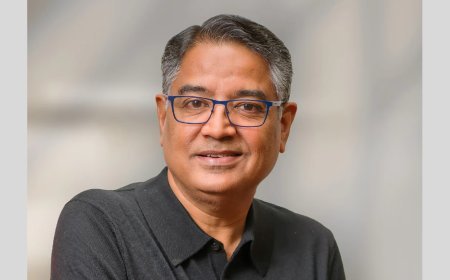
Nearly one year later, Rapido CEO Aravind Sanka has come out in the open to spill the beans on how exactly he wants to take the market by storm.
“Bengaluru has over 1 Lakh FSSAI-licensed restaurants. Fewer than 30,000 are listed on Swiggy or Zomato. The rest are invisible to the online world. These are the restaurants we are targeting.”
For Sanka, the missing 70,000 restaurants is an opportunity similar to the one he saw in the autorickshaw segment before the Covid-19 pandemic, when most drivers were offline.
“We are following the same playbook, where we brought auto rickshaws onto the platform and digitised them under a zero-commission model,” the founder told Inc42 in an exclusive interview.
If you add to this the fact that the average ticket size of an Indian eating out is around ₹100, while the average order value on incumbent platforms hovers around ₹400, the market gap that Sanka is chasing becomes apparent.
What Sanka means is that when people eat out, generally at smaller restaurants and street food stalls, the cost of eating there is usually less than ordering food from Swiggy and Zomato. Currently, food delivery platforms are serving higher-value orders and not the everyday, low-cost meals. However, the shift is underway, with initiatives like Swiggy’s Toing.
“It is a gap not of demand, but of affordability and trust. Rapido, which spent nearly a decade reshaping urban mobility by putting drivers first, believes it can do the same for restaurants. The way we are trying to do it at Ownly is looking at the same problem statement from a restaurant-first approach,” Sanka said.
Exploiting The Cracks In Food Delivery Duopoly
For most of the past decade, India’s online food delivery story was a tale of two companies: Zomato and Swiggy. Together, they commanded over 90% of the organised market, listing hundreds of thousands of restaurants.
But in the last two to three quarters, both companies acknowledged that growth in core food delivery in metro cities has plateaued. To maximise the profits in the food delivery vertical and cushion against quick commerce losses, both players have been raising restaurant commissions and platform fees for end consumers.
In April 2023, Swiggy charged a platform fee of ₹2. Since then, it has raised this fee seven times to ₹17.58, a jump of 790%. Similarly, Zomato introduced a ₹2 platform fee in August 2023, which has since increased by 645% to ₹14.90.
Restaurant commissions, which can run as high as 30-40%, have also led restaurants to inflate menu prices on the apps, sometimes by 20-30%, compared to offline rates.
“The current commission structure does not allow restaurants to improve their bottom line. Therefore, they are forced to inflate the cost of food items. That is not honest pricing,” Sanka told us adding that food ordering has started to go out of the reach of the masses.
He said that the result is a market that is expensive for consumers, expensive for restaurants, and paradoxically not growing, even though hundreds of millions of Indians continue to eat out every day.

Citing UPI transaction data, Sanka said that India has roughly 25-30 Mn unique monthly transacting users across both food delivery platforms. But the number of Indians eating out is at least 200-300 Mn, minus the people in tier IV and tier V towns and cities. Despite their massive scale, these platforms are still catering to a thin slice of upper-income urban India.
“If you look at the number of people using online food delivery compared to the number of people eating offline, it is less than 10%. People are already eating out at thaali places or at samosa stalls. But online players have yet to tap into this market,” Sanka said.
Replicating The Meesho Playbook
Walk into any residential neighbourhood, and you will find a universe of small eateries, tiffin centres, street-adjacent stalls and family-run dhabas that have no presence on any food aggregator platform. This is not because they lack customers but because the economics of going online simply does not work for them.
Ownly’s early data from its Bengaluru launch offers a glimpse into how large this market is. Of the 2,300-odd restaurants it has onboarded in the city since launch, 15% are entirely new to online food delivery.
The finding aligns with broader industry data. India’s food services market, estimated at over $85 Bn in 2025 and growing at a CAGR of over 10%, is overwhelmingly dominated by unorganised players. Dine-in still accounts for 60% of the food services market.
Sanka draws a direct analogy with Meesho, which unlocked a market Flipkart and Amazon had largely ignored — not by competing for the same urban shopper but by making commerce accessible to small-town India through ruthless cost efficiency and aggressive volume push.
“In some ways, yes, we are going after what Meesho did in ecommerce. But we are starting with Tier I. Eventually the long tail will follow,” Sanka told Inc42.
The zero-commission model is the key to unlocking this supply. The prospect of zero platform fees is transformative for a ₹80 thali joint in HSR Layout or a small biryani shop in Bengaluru’s Indiranagar. They can list their actual prices online without inflating them to cover commission costs.
“From a restaurant’s point of view, the cost of doing online business should be zero. They are coming online, there is no bill, no added cost. Online should be extra money and not an extra expense,” the Rapido CEO said.
Rapido’s Structural Edge In Food Delivery
At its core, a food delivery business is a logistics business. The food delivery economics for low average order values does not work unless one owns a delivery fleet or gets it cheaply. This is where Rapido’s structural advantage is most apparent. Rapido currently operates one of the largest fleets of bike-taxi riders.

The platform already handles deliveries for Zomato, Swiggy, ONDC, Instamart and Zepto. It also has direct restaurant partners.
Its riders, aka captains, understand food delivery, and many already do it alongside bike-taxi rides.
“ONDC is one of our biggest clients. We deliver for Swiggy, Zomato, ecommerce and quick-commerce platforms. Our captains already know how to handle a food delivery order.” Sanka said.
Rapido also has a strategic advantage, which Swiggy and Zomato severely lack. Consider this: Bike-taxi demand peaks sharply in the morning and evening commute windows, and drops by nearly 50% in the afternoon. Food delivery, by contrast, peaks at lunch and dinner. The two demand curves are almost perfectly complementary.
“From a driver utilisation point of view, we can be much more efficient. Food delivery exactly complements bike-taxi demand patterns. And hence our logistics cost is lesser than others,” Sanka said.
This is precisely the playbook that Grab and Uber deployed globally, as it gives them a decisive cost advantage over pure-play food platforms.
For Ownly, this means the delivery fee, which is the primary revenue model, can be kept genuinely low without bleeding money.
“Honest pricing or zero-commission doesn’t mean you will bleed money. It puts a check on your cost structure. Your cost has to be optimal,” he said.
Then, captains, too, are given autonomy. Sanka told us that the bike-taxi partners already working with them will be given the choice to opt for food delivery, like they do mobility or parcel delivery orders.
They are informed upfront whether an incoming order is a food delivery, parcel, or bike-taxi trip.
Surviving The Graveyard Of Food Delivery Dreams
India’s food delivery graveyard is well-populated. Amazon’s tryst with food delivery is well-known. Global mobility major Uber had to exit the food delivery business in India and sold its business, Uber Eats, to Zomato in 2020.
Amazon has several times piloted food delivery via its main app, relying on a discount-led strategy, to capture the sub-premium and premium markets of Bengaluru. However, Amazon had to put the brakes on its food delivery experiment, as it was unable to get volume-driven traction.
Ola launched Ola Foods and Ola Cafe to leverage its own logistics, but it had to pull the plug on the verticals due to internal cash flow challenges. ONDC created initial buzz but has since struggled to sustain.
“One of the big reasons why people have failed in this industry is because of logistics. Ola was a mobility player, but it did not have bike taxis at the scale of the existing players. ONDC players don’t own logistics. That’s the structural problem,” Sanka told us.
Another recurring failure was the discount trap — acquiring customers through subsidies that proved unsustainable.
“Ownly is not a discount platform. What consumers are seeing when they compare Ownly’s prices to Swiggy or Zomato is not a Rapido subsidy; it is the absence of a commission markup. Restaurants feel we are a very fair platform. They are passing on the benefits to customers. We don’t force discounts. Our model is: be fair, be honest on pricing, and the consumers will get the best price,” Sanka said.
Structurally lower prices and not short-term subsidies is at the heart of Ownly’s strategy, the founder added. If the thesis holds, the business should be self-sustaining even at low order values. However, with an armada of just 2,300 restaurants to cater to, it may be too soon to give a verdict.
[Edited By Shishir Parasher]
The post Food Delivery Is Expensive, And Rapido Wants It Fixed appeared first on Inc42 Media.