

Can IndieSemiC Win China’s 20-Cent Chip Challenge To India?
 Superadmin




You or Neil Armstrong — who’s smarter? Ignore the 57 years spaced in between. And, it’s you, beyond doubt.




The ubiquitous smartphone you carry in your pocket today can far outcompete Apollo 11, let’s keep Artemis II aside, when it comes to computing power. And, what makes it possible? It’s advanced semiconductor technology that allows massive processing power, memory, and connectivity to be integrated into a single piece of silicon.
Known as a system-on-chip (SoC), this design integrates key components such as the CPU, memory, and input/output functions into a grain of sand that makes the backbone of a smartphone, or an IoT device, or any embedded system.
The $138.46 Bn SoC market is expanding faster than the sands of time with the crowding of connected devices and the rise in artificial intelligence (AI) and machine learning (ML) to reach $205.97 Bn by 2029. While semiconductor hubs like Taiwan, China, and the US rule the global SoC landscape, India sees its semiconductor opportunity hinge on building stronger chips and sharper design.
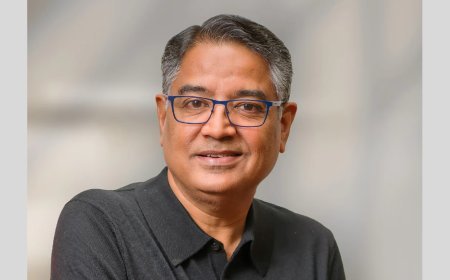
For domestic players like Surat-based IndieSemiC, this throws up a significant opportunity, particularly in addressing India’s large, price-sensitive market, believes founder Nikul Shah.
The company targets areas like next-gen automotive and surveillance systems, radar, lidar, camera feeds, real-time vision computing, and neural net inferencing for the application through its quad-core AI processor called ISC-R1.
Modules That Can Crack The Market
IndieSemiC set out three years back to build what it calls a fabless semiconductor company in India. But, instead of diving into designing, it chose to build RF modules to enter the chip market. The Radio Frequency modules are small electronic devices used in wireless, short-to-medium-range communication.

The modules are built using off-the-shelf chipsets from semiconductor companies such as Nordic Semiconductor of Norway and the US-based Semtech for applications like Bluetooth, Wi-Fi, and LoRa connectivity.
This strategy helped the company gain some early traction. IndieSemiC added to this momentum and built a portfolio of over 15 modules — all certified for the Indian market — and deployed around 60,000 units in the past year. Shah aims to scale it to a million this year as his startup gears up to enter the US and European markets once it gets the certifications.
But modules, Shah insists, are only the beginning. IndieSemiC aims at building its own affordable, general-purpose microcontrollers that can compete with low-cost chips, particularly those imported from China. Rather than competing head-on purely on cost, the startup is attempting to differentiate through system-level integration, customisation, and localised support.
“We are a fabless company and fundamentally, a product company, not a services business. Our focus is on building and selling products that we develop in-house,” Shah told Inc42.
Its first chip, under development at the moment, is a general-purpose microcontroller that will come in two variants. One version is designed for non-IoT applications and will replace legacy microcontrollers used across industries. The second version will integrate IoT capabilities, particularly LoRa connectivity, enabling long-range communication use cases.
The chip is expected to operate at 200 MHz and support lightweight ML workloads, allowing edge devices to connect to the cloud for AI-based applications.
“We follow an NRE model in some cases to onboard customers. If a customer needs specific IP to integrate with our modules, we develop it for them at a nominal cost. But the end goal is always product deployment at scale, not services revenue,” he said.
The company reported a revenue of over $101,000 (around ₹87 Lakh) in the year ended March 2025, its MCA filings showed. The loss it incurred in the same period surpassed $47,000 (₹40 Lakh).
Vertical Integration As Core Strategy
“We started our SoC design journey as part of a broader vertical integration strategy, and we are seeing strong inbound interest from companies,” claimed the founder. IndieSemic recently partnered with Prizor Viztech, a security and surveillance solutions provider, to develop and deploy ISC-S2-PZ, a CCTV-specific SoC it designed.
“SoCs are the future for India, and it is an area where domestic capability needs to be built. What we are working on is an affordable SoC. Today, a large share of chips coming from China are priced very low, often in the range of 10 to 20 cents, and that sets the benchmark for the market.”
This also shapes how the company sees the competition. While global players such as STMicroelectronics, Espressif Systems, and Texas Instruments dominate the microcontroller market, IndisemiC sees an opportunity in offering engineering support and flexibility. Unlike large chipmakers that ship standardised products at scale, this startup is positioned as a partner that can adapt firmware, customise features, and respond quickly to specific requirements.
“Indian OEMs increasingly look to diversify supply chains and reduce dependence on imports, a domestic alternative with strong engineering support will gain traction,” Shah said. The company is partnering with electronics manufacturing services company Syrma SGS and is in talks with India-based OEMs like VVDN.
Inside The Manufacturing Stack
The company follows a fabless model — outsourcing fabrication while focusing on design and product development. It is in discussions with foundries such as TSMC and GlobalFoundries for wafer production. For packaging and assembly, it has signed an agreement with Kaynes Technology, which will anchor part of the supply chain in India through a Sanand-based OSAT facility. The broader manufacturing flow is being structured such that wafers are sourced from overseas foundries, packaging is carried out domestically, and testing is conducted within India.
A key part of the company’s narrative is its focus on building with Indian intellectual property. It is leveraging the VEGA processor architecture developed by C-DAC, along with internally developed and domestically sourced IP blocks, with the aim of reducing reliance on foreign technologies over time. To be sure, VEGA Microprocessors (also known as VEGA Processors) is an initiative to develop a portfolio of microprocessors and their hardware ecosystem, by C-DAC.
So far, IndieSemiC has onboarded over 8,200 customers through its module business. Its products are being deployed across a range of sectors, including smart metering for water, gas, and electricity, automotive applications, consumer electronics such as air conditioners and remote-based systems, as well as asset tracking and drone communication, where LoRa enables long-range connectivity over one to two kilometres.
Closing In On First Fundraising
The bootstrapped startup is geared up to raise its first institutional round. It plans to enter the market for a Series A fundraise, targeting venture capital firms, technology investors, and family offices, with the process expected to begin shortly and close within a few monrgs. The capital will fund chip tape-out, expansion of the design team, and speeding up of production.
Under the IT ministry’s design-led incentive (DLI) scheme, IndieSemiC has the software access and it is now applying for DLI 2.0 for funding support.
The company is targeting shipments of 5 to 10 Mn units across both modules and SoCs by 2030. Whether it can get there will depend on its ability to bring its first chip to the market, scale its manufacturing, and convert its existing customer base into long-term buyers.
India’s SoC Ecosystem
As the $45-50 Bn domestic chip industry stays the course to surpass $100 Bn in the next five years, India is fast emerging as a hub for SoC designing and manufacturing.
The evolving ecosystem is fed by policies and programmes such as Chips to Start-up, DLI, and indigenous RISC-V efforts like SHAKTI.
Although SoCs have fostered a $144.23 Bn global market that’s projected to reach $317.66 Bn by 2034, averaging a 9.30% growth rate, India has only a few scaled players. High development costs, IP licensing, EDA tools, long design cycles, and go-to-market execution are considered the bottlenecks for the local market.
For Indian startups, simpler, localised use cases such as smart energy meters, CCTV, and industrial control offer a more practical entry point than highly complex smartphone or compute SoCs, believes Ashok Chandok, who presides over the industry body India Electronics and Semiconductor Association (IESA).
“Building an SoC is a high-risk, high-reward proposition,” said Chandok, noting that the opportunity lies in targeting focussed, application-specific markets, rather than chasing complex, leading-edge chips. SoC success requires significant capital, engineering depth, and infrastructure, making it difficult for smaller players.
On the home turf for SoCs, IndieSemiC races with the likes of Mindgrove Technologies, CalligoTech, Chipspirit, and Vervesemi. They develop high-performance RISC-V CPUs, security solutions, and specialised ICs for motor control and edge AI.
If IndieSemiC succeeds, according to founder Shah, it would offer a rare proof that Indian semiconductor startups can move beyond design services into owning silicon products.
Edited by Kumar Chatterjee
The post Can IndieSemiC Win China’s 20-Cent Chip Challenge To India? appeared first on Inc42 Media.