

AI Wearables Are Here To Stay; Can NeoSapien Make The Most Of This Wave?
 Superadmin




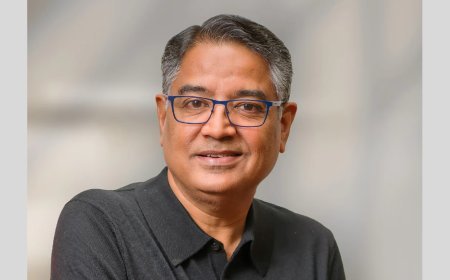
Dhananjay Yadav has a ‘second brain’, hanging from a chain around his neck. It listens to every conversation he makes and sends out alerts for every single task he needs to do.




Intrigued? The lightweight trinket with a pulsing LED is easily mistaken for a simple USB pen drive. But the complex technology inside the thumb-size plastic case makes it India’s first wearable AI assistant.
Neo 1, the first product released by Bengaluru-based NeoSapien, follows verbal communications and generates notes, transcripts, and reminders. “It creates a superhuman by leveling up to Mind 2.0,” says the NeoSapien website. Founder Dhananjay teamed up with his cousin Aryan Yadav for rolling out the startup on the $1.8 Bn home turf for AI wearables that’s expanding 31.2% every year to reach $12 Bn by 2030.
The Yadav brothers rolled out NeoSapien in 2024 and it became popular with their Shark Tank India Season 4 appearance last year after the March 2025 launch of Neo 1. The startup made news again at the India AI Impact Summit 2026, when some of its products were allegedly stolen from the booth during a security shutdown when Prime Minister Narendra Modi was visiting the venue.
The incident came close on the heels of the company raising $2 Mn in a seed funding round, which earned it the backing of venture capital fund Merak Ventures and angel investors like boAt cofounder Sameer Mehta, Pixxel’s Awais Ahmed, Anupam Mittal of Shaadi.com, Emcure Pharmaceuticals’ Namita Thapar and former Koo CEO Aprameya Radhakrishna.
In the one year since its launch, Neo 1 has picked up momentum and is selling thousands of units per month, the founder said, refusing to share the sales figures.
Inc42 took a deep dive into the business, had a conversation with Dhananjay Yadav, and spent some hands-on time with Neo 1. The aim was to assess if NeoSapien was all set to ride the global wave of wearable AI.

The Making Of A Real-Life ‘Jarvis’
“I always wanted to be a founding team member, but never a founder.” Dhananjay was rather candid as he went back into the making of the AI startup.
If stints at companies like Razorpay, ClearTax and Homelane brought him closer to the evolving ecosystem, then the first taste of entrepreneurship came at Livspace Store (formerly Ukeyo.com). He was a member of the founding team until he was picked up by European ecommerce giant Zalando for its Berlin office.
The turning point came with the launch of ChatGPT. “It was magical,” he said. “I was sure that Generative AI would soon be a revolutionary technology.”
Dhananjay’s beliefs resonated with Aryan’s. The IIT-Madras graduate was experienced in the adjacent field of Natural Language Processing (NLP) that works with spoken and written human communication. Their discussions on the emerging disruption driven by AI led to the launch of a startup that would “reimagine hardware” in this brave new world.
“In every new era of technology, there is a change in the hardware form factor. We are witness to the rise of PCs and laptops to the evolution of smartphones. And, now, it’s the age of AI,” Dhananjay said.
He wasn’t wrong in interpreting the future. People are befriending, depending on and even falling in love with artificial intelligence. By the end of 2025, around 16.3% of the 8 Bn global populace had embraced GenAI tools, representing one in six people worldwide.
Dhananjay could predict a soaring demand for the voice-first mode of interaction that would maximise convenience and enhance user experience. He pointed to the Hollywood depiction of Jarvis, Iron Man’s AI assistant in the superhero film, as an inspiration.
NeoSapien ideated the device to constantly listen to the user to make personalisation more precise. The brothers believed that active interaction with AI through prompts wouldn’t enable it to understand the entire context of their needs and it would need to remain connected to the user during each and every conversation.
Some early glitches in the hardware were rectified soon, but finances proved to be a challenge for the founders. A creative approach was needed. “We identified a cafe, called Araku, in Bengaluru. This used to be frequented by founders and investors. We used to sit there and advertise our prototype. Some people found it interesting and tweeted about it which generated virality,” Dhananjay said. This eventually led to the first inflow into the company from Sameer Mehta.
Surviving The AI Wearable Hurdles
The $23.56 Bn global AI wearable market, racing at 17.6% a year to reach $303.59 Bn by 2035, has set off a rush among multinationals to throng the market. NeoSapien could find its closest equivalent in Humane’s AI Pin or Harvard dropout Avi Schiffman’s startup Friend. Both aimed to create screenless AI-powered wearables.
But, both the products were widely rejected by consumers. Humane’s AI Pin, priced at $699, was panned for flaws that caused frequent malfunctions. The company shut down soon after the defect surfaced. Meanwhile, Friend barely sold around 3,500 units, when its marketing material provoked disgusted reactions from many who rejected its proposition of replacing human companionship.
NeoSapien claimed to have been cautious in avoiding such pitfalls. According to Dhananjay, the nascent AI wearables space in India is yet to be crowded and the company has no exact rivals. Among the closest competitors, it counts Meta’s RayBan AI glasses.

Neo 1 is priced at just around ₹10,000. Its use case appears more clear and less controversial when compared to Friend as the device is positioned as a productivity assistant that generates transcripts of conversations. It can be toggled off or on through the companion app, with the LED light pulsing when it’s actively listening. At any point, one can go into the app and save a ‘memory’, at which point the audio is processed.
Accessing a particular memory pulls up extensive meeting notes, which recap the conversation, and a chatbot, which can be queried to fetch further details. The app also generates automatic action items for follow-up. This can be added to one’s calendar as reminders. With a few more taps, the user can also check the verbatim transcript of the conversation, though no audio recording is stored.
Neo OS, the operating system that powers Neo 1, is built on patented technology that utilises both closed- and open-source models as well as a proprietary knowledge graph. This means it ‘learns’ the user’s needs over time, resulting in more personalised outputs, Dhananjay said.
Apart from personalisation, broad language compatibility is another core USP of the AI pendant. NeoSapien claims Neo 1 is the only one in the world to support over 40 Indic languages and over 100 global languages.
“Our initial ICP was traditional entrepreneurs from MSMEs – people like wholesale merchants and real estate owners. For them, calendarised conversation, calls, and in-person meetings are critical,” pointed out the founder. Given the tightly networked nature of such industries, this also helped the product gain word-of-mouth traction.
From the regulatory perspective, all data collected by the pendant is processed and stored on the company’s cloud servers. That means it needs internet connectivity to function. NeoSapien claims that all such data is encrypted and secure, and will not be sold to third parties. The company also claims it is compliant with applicable data privacy regulations.
Mapping The Way To Neo 2
NeoSapien appears to be more interested in becoming a vertically integrated platform for AI wearables, rather than limiting itself to its core product. It plans to license Neo OS to other firms, enabling them to build their own hardware using its own layer. “Talks to that effect are already underway,” Dhananjay said.
“It’s like how Google Pixel always gets the latest Android features, but Samsung phones also run Android. We want to open up NeoOS the same way. We want 500 Mn Indian users on our platform and 20 Mn on our devices.”
In 2025, India emerged as a global leader in AI adoption, with 62% using GenAI at work, and 90% employers and 86% employees believing that it impacts productivity positively. At least 75% employees and 72% employers think that GenAI enhances decision making, while 82% employees and 92% employers believe it positively impacts the quality of work.
No wonder, companies like NeoSapien have geared up to ride the wave.
Although lofty price tags continue to throw up a challenge for wearable AI devices, a rising disposable income has started driving AI adoption. A flourishing middle class, on course to reach 1 Bn in strength by the time India turns 100 in 2047, has stoked the demand for wearables.
With technology ruling the roost, NeoSapien plans to launch an upgraded version next year. The form factor will remain unchanged as the company has no plans of entering other categories before perfecting the existing one. Neo 2, according to Dhananjay, will be equipped with more advanced features such as ‘agentic use cases’.
The startup also doesn’t plan to raise its headcount aggressively. From its current 13-member team, it could go up to 20 people at most, he said, citing inspiration from AI startups like Lovable and Cursor maker Anysphere that achieved major revenue milestones with small teams.
Although NeoSapien plans to penetrate the Indian market more deeply, foray into the UAE or the US markets could be on the cards, Dhananjay said.
In the long run, the founders dream of building a brand phenomenon. “One day, we want to have Neo Con – an event where we will unveil new features and devices that will be the first of this scale in India, on par with Google IO or any Apple launch event,” Dhananjay summed up.
[Edited by Kumar Chatterjee]
The post AI Wearables Are Here To Stay; Can NeoSapien Make The Most Of This Wave? appeared first on Inc42 Media.