

AI Is India’s Hottest Bet, But Why Are Investors Holding Back?
 Superadmin




From a futuristic idea to crafting narratives now, AI has come a long way in a very short span of time. The nascent tech, which sees some sort of new value additions or permutations on a daily basis, has emerged as a defining trend for the Indian startup ecosystem over the past couple of years.




Accelerating at an unprecedented pace, the Indian AI ecosystem is expected to breach the $130 Bn mark by 2030. Yet, some cracks have already begun to show up in the space.
Over the past few months, several early-stage AI-native startups — NeuroPixel.ai, Alle, Astra, CodeParrot, Subtl.ai, to name a few — have shut down despite raising millions from investors. Most recently, Flipkart-backed NeuroPixel AI, which had raised $1.3 Mn in 2022 at a valuation of about $6 Mn, shuttered due to intense competition from foundational models and financial strain.
Such recent instances of shutdowns have also triggered a shift in investor perception towards the Indian AI space.
As per Inc42’s Indian Investor Ranking & Sentiment Survey Q1 2026, about 92% of the 70 institutional investors surveyed are taking a rather selective approach to their AI bets.
Only about 7% investors are willing to pay the current valuation premium commanded by Indian AI-native startups. All in Capital’s founder Kushal Bhagia attributed this willingness to pay a premium to intrinsic competition among investors for making early stage AI bets so that they don’t miss out on deals.
“At the early stage, we see investors paying premiums — even mega premiums — to win deals,” Bhagia said, pointing to increasing competition between Indian and global investors who see AI as the most investment-ready frontier technology in India.
As per Inc42’s survey, nearly 48% of institutional investors believe AI and robotics represent the most investment-ready frontier tech opportunity in the country. This places AI significantly ahead of other emerging sectors such as drone and UAV platforms (26%), electric mobility components (11%), biotechnology and genomics (8%), and semiconductor design (5%).
Amid this activity-rife AI ecosystem, what are Indian frontier tech-focused investors looking for in their AI bets? Let’s find out.
From Frontier AI Hype To Applied AI Discipline

The Survey data also indicates that the enthusiasm around AI is now being tempered with caution.
Nearly 43% of investors say they are either avoiding inflated AI deals or waiting for clearer unit economics before committing capital. For many investors, the rapid commoditisation of foundational AI models is at the heart of this shift.
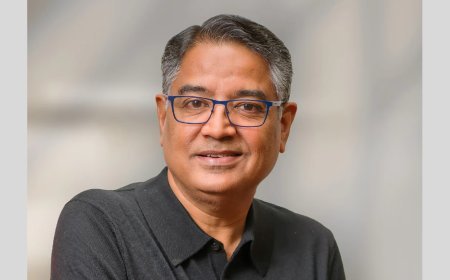
According to Kae Capital’s managing partner Abhishek Srivastava, the model layer is becoming increasingly accessible, underscoring the need for product market fit. “Product build and model is not a moat. It is a commodity accessible to everyone at a certain price per token. What matters is what you surround that model with.”
Thus, in the crowded Indian AI market, proprietary datasets, tightly integrated workflows, strong distribution channels, and domain-specific expertise are factors that are critical to create durable differentiation.
In line with this, investors are increasingly gravitating towards applied AI use cases, particularly catering to use cases in enterprise compliance, manufacturing, and operational workflows. These segments offer clearer monetisation pathways and stronger defensibility compared to thin AI wrappers built on top of existing models.
Even at an early stage, this shift is becoming visible in funding patterns. AI startups are increasingly raising larger seed rounds — often in the $4 Mn to $5 Mn range — driven by the promise of non-linear growth. However, investors say these bets now come with far greater scrutiny.

A key question being asked in diligence today is whether a startup is building durable technology or simply layering a user interface on top of existing large language models.
Founder Depth Matters More Than Ever

Alongside product differentiation, founder quality and domain depth are also becoming decisive investment factors.
While AI has lowered the barriers to building products, investors believe it has simultaneously raised the bar for founders who must demonstrate deep industry understanding and the ability to adapt quickly as the technology stack evolves.
“For us, it is about founder-problem fit and founder-market fit,” Srivastava said. “At an application level, it becomes even more important that you understand the domain deeply. That is where the real moats are built.”
This adaptability is particularly important given the rapid pace of change in the global AI ecosystem, where advancements from large model providers can quickly reshape the competitive landscape.
“We do not even know if, after four or five years, the same technology will remain relevant. That makes valuation and long-term forecasting inherently difficult,” Srivastava added.
In that sense, while AI continues to dominate investor interest in India’s frontier tech landscape, capital is increasingly flowing towards startups that can demonstrate real-world deployment, defensible business models, and strong founder-market alignment — rather than simply riding the AI wave.
[Edited by: Shishir Parasher]
[Creatives by: Varshita Srivastava]
The post AI Is India’s Hottest Bet, But Why Are Investors Holding Back? appeared first on Inc42 Media.